


No products in the cart.


What is Sunscreen Serum? 4 Excellent Sunscreen Serums You Should Try Today
Sunlight is the number one enemy of your skin — accelerating aging, causing pigmentation, and even leading to skin cancer. For many years, traditional sunscreen has been the only protection solution. However, with the continuous evolution of the beauty industry, a new star has emerged: the sunscreen serum. So, what exactly is a sunscreen serum?
Can this product completely replace traditional sunscreen? And which are the best sunscreen serums you should invest in today? Let’s explore with KOR!
1. What Is Sunscreen Serum?
1.1. In-Depth Definition: What Is a Sunscreen Serum?
A sunscreen serum is a skincare product that combines the benefits of a nourishing facial serum with the UV protection ability of sunscreen. Its main difference lies in the texture — instead of being thick like cream, it has a lightweight, watery consistency that absorbs quickly and penetrates deeply into the skin.

1.2. Advantages and Disadvantages of Sunscreen Serums
| Characteristics | Advantages | Disadvantages |
| Texture: | Ultra-lightweight, fast-absorbing, and non-comedogenic. | While most provide broad-spectrum protection, some may have a lower SPF index. |
| Function | Combines skincare and sun protection (All-in-one). Minimizes skincare steps. | Usually offers less coverage and weaker water/sweat resistance compared to traditional sunscreens. |
| Sensation | No white cast, no greasy or sticky feeling on the skin. | Often more expensive than regular sunscreens. |
| Protection Range | Most provide broad-spectrum protection but may have a lower SPF index. | Requires more frequent reapplication. |
2. Can Sunscreen Serum Replace Sunscreen?
This is the most frequently asked question when users consider switching or adding a new skin protection product. The answer is not completely “Yes” or “No”, but depends on individual needs and specific usage conditions.
2.1. Differences in Formula and Index
Traditional sunscreen (cream or lotion form):
- Main purpose: To create a durable physical or chemical barrier that resists water and sweat.
- Index: Usually has high SPF and PA levels (SPF 50+/PA++++), specialized for outdoor activities, long sun exposure, or intense movement.
Sunscreen serum:
- Main purpose: To gently protect the skin daily while maximizing skincare benefits.
- Index: Typically ranges from SPF 30 to SPF 45. Although this level is ideal for indoor use or office environments, it may not be sufficient if you spend the whole day under strong sunlight.
2.2. When Can It Be Replaced?
You can use sunscreen serum instead of sunscreen in the following cases:
- Light daily activities: When you only move between home and office, work indoors, or have direct sun exposure for less than 2 hours.
- Oily or acne-prone skin: The lightweight texture of serum helps prevent clogged pores — the main cause of acne, which often occurs when using thick sunscreen creams.
2.3. When Should It Be Combined (Not Replaced)?
You should combine sunscreen serum with traditional sunscreen when:
- Outdoor or sports activities: Swimming, hiking, running, or going to the beach. In these cases, a sunscreen with high water resistance is essential.
- During skin treatment: Skin after laser, peeling, or when using retinoids requires a strong protective layer with soothing properties, usually found in physical sunscreens.
In summary: Can sunscreen serum replace sunscreen? It is a convenient upgrade for daily protection, but not the best choice for intense sun exposure.
3. Detailed Guide on How to Use Sunscreen Serum
Using sunscreen serum correctly is the key to ensuring maximum skin protection while still taking full advantage of its skincare benefits.
3.1. Skincare Routine Before Applying Sunscreen Serum
The basic principle in skincare is “light before heavy.” Sunscreen serum is always considered the final step in your skincare routine, applied right before makeup (if any).
Standard skincare steps before using sunscreen serum:
- Step 1: Cleansing – Wash your face thoroughly with a suitable cleanser to remove dirt and excess oil. This step is essential to help nutrients absorb effectively.
- Step 2: pH Balancing (Toner/Essence) – Use toner to balance skin pH and provide basic hydration.
- Step 3: Treatment Serum – Apply your specialized serums (Vitamin C, B5, Hyaluronic Acid, Peptide, etc.). Make sure the treatment serum is fully absorbed (wait about 1–2 minutes) before moving to the next step.
- Step 4: Moisturizing (Moisturizer) – If your skin is dry or it’s wintertime, apply a light moisturizing cream to lock in previous nutrients. If you have oily skin and your sunscreen serum already contains moisturizing ingredients, you can skip this step.
3.2. How to Apply Sunscreen Serum Effectively
Recommended amount – The standard amount of sunscreen is 2mg/cm² of skin. For serum, due to its liquid texture, use about 3–4 drops or ⅓ teaspoon for the entire face and neck. Never apply too little, as it will reduce the actual SPF protection.
Application technique:
- Divide the amount – Do not pour all the serum onto your hand and apply it at once. Divide it into two applications: apply the first thin layer evenly, wait about 30 seconds, then apply the rest, focusing on areas exposed to sunlight (cheeks, forehead, nose bridge).
- Patting – Instead of rubbing strongly, gently pat the serum into your skin using your fingertips. This helps the serum absorb deeply without clumping or pilling, especially important after your skincare steps before using sunscreen serum.
- Reapply – Like traditional sunscreen, you should reapply sunscreen serum every 2–3 hours, especially if you’re outdoors or sweating heavily.
4. Review of the 4 Best Sunscreen Serums Today
Based on texture, protection index, skincare ingredients, and compatibility with various skin types, here is a review of 4 highly rated sunscreen serums on the market.
4.1. Anessa Day Serum SPF50+ PA++++
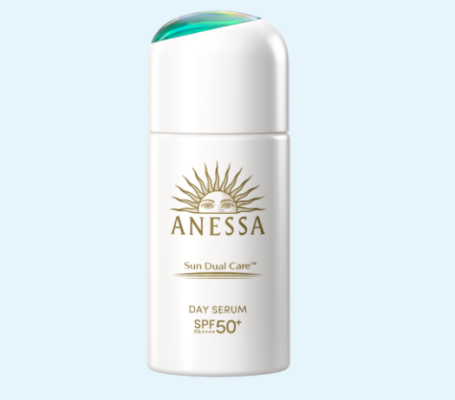
- Key features – The product provides broad-spectrum sun protection and integrates anti-aging technology. The lightweight serum texture allows for quick absorption without stickiness.
- Suitable for – All skin types, especially for those seeking both sun protection and anti-aging skincare benefits.
4.2. Bioré UV Body Serum Sunscreen
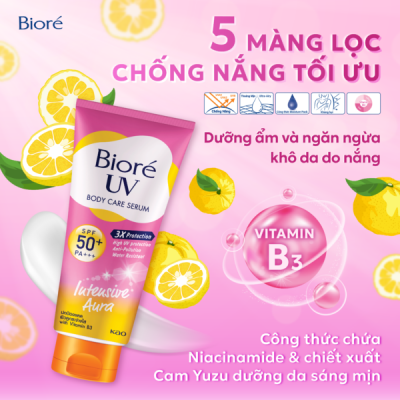
- Key Features: The product is specially designed for body skin, providing effective sun protection while brightening the skin and shielding it from dust and pollution. The serum texture spreads easily and does not leave a greasy or sticky feeling.
4.3. Eucerin Ultra Protection Sun Tone Up Serum
- Key Features: In addition to providing broad-spectrum sun protection, this product helps naturally tone up the skin, giving it a bright and refreshed appearance.
- Suitable for: Those who want sun protection combined with a gentle tone-up effect.
4.4. Skin1004 Madagascar Centella Sunscreen
- Key Features: A product from a Korean brand with a safe formula and mild ingredients. The lightweight cream texture helps gently cover imperfections while providing sun protection and controlling excess oil.
- Suitable for: Acne-prone, oily, and sensitive skin.
5. Criteria for Choosing the Perfect Sunscreen Serum for You
After understanding what sunscreen serum is and reviewing different products, you should apply the following criteria to select the most suitable one for yourself:
5.1. Broad Spectrum Protection
Always choose products labeled “Broad Spectrum” or those that display both SPF (for UVB protection) and PA (for UVA protection).
- SPF: The minimum level should be SPF 30 for daily use.
- PA: Choose PA+++ or higher (or a high PPD rating) to effectively prevent skin aging and darkening.
You can also try the KOR Sunscreen, which offers Broad Spectrum SPF 50+ PA++++ protection.

5.2. Formula Type: Chemical vs. Physical
- Chemical Sunscreen Serum: Absorbs quickly, leaves no white cast, and provides a lightweight finish. Suitable for oily skin and for use under makeup.
- Mineral/Physical Sunscreen Serum: Gentle and less likely to cause irritation. Suitable for sensitive skin or post-treatment skin.
5.3. Additional Skincare Ingredients
- Aging Skin: Choose serums containing Vitamin C, E, Niacinamide, or Peptides.
- Dry Skin: Choose serums with Hyaluronic Acid, Squalane, or Ceramide.
- Acne-Prone/Oily Skin: Choose serums with Niacinamide, Green Tea, or low-concentration Salicylic Acid.
5.4. Application Experience
Carefully read sunscreen serum reviews to understand how it feels after application. An ideal sunscreen serum should not cause pilling when applied after skincare steps or before makeup.
Conclusion
Sunscreen serums are not just a trend but a major advancement in skin protection technology, solving the discomfort and heaviness of traditional sunscreens. They offer a perfect balance between deep skincare and broad-spectrum protection.
Wishing you find the best sunscreen serum for your skin and achieve a healthy, radiant complexion !
Bài viết liên quan
Jun
2026
14
Đắp mặt nạ bị nổi mụn: Những sai lầm phổ biến và cách khắc phục trong mùa hè
14/06/2026
Đắp mặt nạ là bước chăm sóc da yêu thích của nhiều người, đặc biệt là trong cái nóng oi ả của mùa hè, khi làn da cần được “giải nhiệt” và cấp ẩm tức thì. Tuy nhiên, không ít người gặp phải tình trạng dở khóc dở cười: đắp mặt nạ xong thì da…

Jun
2026
12
Skincare Mùa Hè Cho Học Sinh – Sinh Viên: Routine Chuẩn, Đơn Giản Và Hiệu Quả
12/06/2026
Mùa hè là thời điểm tuyệt vời cho những chuyến du lịch hay các hoạt động ngoại khóa ngoài trời, nhưng đây cũng là khoảng thời gian “khủng hoảng” đối với làn da của học sinh – sinh viên. Nhiệt độ cao, nắng gắt và độ ẩm tăng cao khiến làn da dễ dàng trở…
Jun
2026
10
Da stress vì nắng nóng: giải pháp cấp cứu với mặt nạ B5
10/06/2026
Mùa hè với ánh nắng gay gắt, nhiệt độ cao và độ ẩm biến động là thử thách lớn đối với làn da. Bạn có bao giờ cảm thấy da mình trở nên “khó chiều”, đỏ rát và khô căng sau một ngày dài tiếp xúc với môi trường? Đây chính là dấu hiệu của…

Jun
2026
08
Red, Irritated Skin in Summer: Expert Tips to Soothe and Restore Your Skin Quickly
08/06/2026
When summer arrives, along with the excitement of beach vacations and outdoor activities, our skin must also face many hidden threats. Red, irritated skin during summer not only causes stinging and discomfort but can also be a warning sign that the skin barrier is under stress and in need of immediate care...
 Vietnamese
 English
 Korean
 Zalo
Zalo
 Messenger
 Youtube
 Instagram
 Tiktok
 Shopee